
TL;DR
- SGLang Spec V2 的重点不是改写 DFlash 的数学规则,而是减少 speculative decoding 每轮之间的同步、拷贝、调度和 KV 管理空泡。
- 一轮 DFlash decode 大致包含 prepare block、draft block forward、target verify、accept/bonus、target hidden 写入 draft KV、下一轮输入准备。
FutureMap、on_publish、copy stream 和 CPUseq_lens滞后一轮,都是为了避免每轮都让 CPU 和 GPU 硬同步。- KV over-allocation 用更多显存换更稳定的热路径,适合 DFlash 这种 fixed-block verify 形态,但会提高显存余量要求。
相关链接
- LMSYS Blog: DFlash and Spec V2
- DFlash paper
- SGLang speculative runtime source
- SGLang DFlashWorkerV2 implementation
第二章:结合源码剖析推理优化流程
SGLang Spec V2 的执行路径把 DFlash 的算法收益落到 runtime 热路径上。重点不是逐行复刻源码,而是解释这些结构为什么存在、它们在哪个阶段减少了等待或固定成本。
2.1 源码入口和关键结构
以下代码路径基于 SGLang 84a7a84 整理。后面的代码块是为了讲清主路径而做过删节的源码片段,省略了异常处理、fallback 分支和部分参数。
python/sglang/srt/speculative/dflash_worker_v2.pypython/sglang/srt/speculative/dflash_info_v2.pypython/sglang/srt/speculative/dflash_info.pypython/sglang/srt/speculative/dflash_utils.pypython/sglang/srt/speculative/triton_ops/dflash_prepare_block.pypython/sglang/srt/speculative/triton_ops/dflash_accept_bonus.pypython/sglang/srt/speculative/triton_ops/fused_kv_materialize.pypython/sglang/srt/managers/scheduler.pypython/sglang/srt/managers/overlap_utils.pypython/sglang/srt/managers/schedule_batch.py
核心类:
| 类/结构 | 职责 |
|---|---|
DFlashWorkerV2 |
负责 DFlash speculative decoding 的主执行逻辑。 |
DFlashDraftInputV2 |
在 Spec V2 overlap 下跨 iteration 携带 draft 状态、seq_lens、verified_id、KV allocation watermark。 |
DFlashVerifyInput |
把 target verify 包装成 ForwardMode.TARGET_VERIFY。 |
FutureMap |
在 overlap 模式下跨 iteration 传递 new_seq_lens、verified token、draft input 等 GPU 数据。 |
2.2 一轮 DFlash decode 在 SGLang 中大致怎么跑
2.2.1 Prefill 阶段
在 prefill/extend 阶段,DFlash worker 首先让 target model 正常处理 prompt,同时要求捕获 hidden states:
源码片段:Prefill 阶段捕获 hidden states
model_worker_batch.capture_hidden_mode = CaptureHiddenMode.FULL
batch_output = target_worker.forward_batch_generation(model_worker_batch)
然后把 prompt 对应的 target hidden states 立即 materialize 到 draft KV cache:
源码片段:将 target hidden 写入 draft KV
_append_target_hidden_to_draft_kv_by_loc(
    target_hidden=logits_output.hidden_states,
    cache_loc=model_worker_batch.out_cache_loc,
    positions=positions,
)
这里的“立即 materialize”很关键。原因是 SGLang 的 radix cache/prefix cache 后续可能更新,如果 target hidden states 只临时保存而不立刻写入 draft KV,容易破坏 prefix cache 复用和 KV 状态一致性。
部署时,这一步是在用一次 prefill 阶段的额外写入,换后续 draft path 的上下文质量。如果这里延迟太高,短输出请求很容易还没摊开成本就结束;如果这里不写稳,后续 prefix cache / draft KV 一致性会变成更麻烦的问题。
prefill 结束后,DFlash 会生成下一轮 decode 需要的 DFlashDraftInputV2:
源码片段:构造下一轮 DFlashDraftInputV2
verified_id = next_token_ids
new_seq_lens = model_worker_batch.seq_lens
2.2.2 Decode 第 1 步:准备 DFlash block
每轮 decode 时,DFlash 使用上一轮的 verified_id 作为 block 第 0 个 token,后面填 mask token:
源码片段:DFlash block token 初始化
block_ids[:, 0] = verified_id
block_ids[:, 1:] = mask_token_id
同时构造 positions_2d 和 verify_out_cache_loc_2d。
SGLang 为这个步骤实现了专门的 Triton kernel:triton_ops/dflash_prepare_block.py。这个 kernel 一次性完成 block_ids、positions、cache_loc 的准备,避免 Python eager 路径里多个 tensor op、gather、scatter 和 kernel launch。
这里主要防的是“小操作把大模型省下来的时间吃掉”。这些 tensor shape 不大,但每轮都会发生;如果散落成多个 eager op,就会制造 kernel launch、同步和 Python 调度噪声。
2.2.3 Decode 第 2 步:draft model 一次跑完整 block
DFlash 构造一个 ForwardBatch,使用 ForwardMode.TARGET_VERIFY 风格的固定 block 形态跑 draft model:
源码片段:draft model block forward
forward_batch = ForwardBatch(
    forward_mode=ForwardMode.TARGET_VERIFY,
    input_ids=block_ids.flatten(),
    positions=positions,
    input_embeds=input_embeds,
    spec_algorithm=SpeculativeAlgorithm.DFLASH,
    capture_hidden_mode=CaptureHiddenMode.NULL,
)

draft_logits_output = draft_model_runner.forward(forward_batch).logits_output
这里 draft model 返回 block 内 hidden states。SGLang 随后用 target model 的 lm_head 从这些 hidden states 中得到 draft tokens:
源码片段:用 target lm_head 采样 draft tokens
draft_next = _greedy_sample_from_vocab_parallel_head(
    hidden_states=draft_hidden[:, 1:, :],
    lm_head=target_lm_head,
)
这个设计有两个含义:
- draft model 主要负责快速产生 block hidden states。
- token id 的 vocab projection 使用 target lm_head,避免 draft vocab/head 与 target 不一致带来的额外复杂性。
draft path 的部署目标不是“尽可能强”,而是“足够便宜且接受率足够高”。一旦 draft block latency 接近 target verify latency,或者需要复杂的逐 token draft loop,投机解码的净收益就会被迅速压缩。
2.2.4 Decode 第 3 步:target verify
DFlash 把 draft tokens flatten 后交给 target model verify:
源码片段:target verify forward
verify_input = DFlashVerifyInput(
    draft_token=verify_input_ids,
    positions=positions,
    draft_token_num=block_size,
    capture_hidden_mode=CaptureHiddenMode.FULL,
)

verify_forward_batch, can_run_cuda_graph = verify_input.prepare_for_verify(...)
target_out = target_worker.forward_batch_generation(
    forward_batch=verify_forward_batch,
    is_verify=True,
    skip_attn_backend_init=True,
)
DFlashVerifyInput 的作用是:
- 设置
ForwardMode.TARGET_VERIFY。 - 把 input ids 改成 draft tokens。
- 让 target model 返回 block 内每个位置的 logits。
- 捕获 hidden states,供下一步写入 draft KV cache。
verify 是最容易被误解的阶段:它可以并行,但仍然消耗 target model capacity。高并发时要重点看 batch_size * block_size 形成的 verify token 数,以及这些 token 最后有多少真正变成 committed tokens。
2.2.5 Decode 第 4 步:计算 accept length 和 bonus token
greedy 模式下,DFlash 的验证规则是:
accept while candidates[:, 1:] == target_predict[:, :-1]bonus = target_predict[accept_len]commit_len = accept_len + 1
也就是:
给定 candidates = [current, d1, d2, d3, ...] 和 target_predict = [p1, p2, p3, p4, ...],如果 d1 == p1 就接受 d1,如果 d2 == p2 就继续接受 d2,直到第一次不匹配。最后附加 target 在该位置预测出的 bonus token。
SGLang 为这个步骤实现了 Triton kernel:triton_ops/dflash_accept_bonus.py。它一次性输出 accept_len、commit_lens、bonus_ids、out_tokens、new_seq_lens。
这个 kernel 的收益不是改变算法复杂度,而是减少每轮 decode 中非常频繁的小 tensor 操作。
accept/bonus 是 scheduler 下一轮能否尽早推进的关键信号源。它输出的不只是 token,还包括 commit_lens 和 new_seq_lens;这些数据越少经过 CPU 同步,下一轮越不容易被卡住。
2.2.6 Decode 第 5 步:把 target hidden 写入 draft KV cache
target verify 后,DFlash 取 target hidden states:
源码片段:读取 target verify hidden states
hidden = logits_output.hidden_states
hidden = hidden.view(bs, block_size, -1)
然后只把 committed prefix 对应的部分写入 draft KV cache:
源码片段:把 verify hidden 写入 draft KV
_append_target_hidden_to_draft_kv_by_loc(
    target_hidden=hidden.reshape(-1, hidden_dim),
    cache_loc=verify_out_cache_loc,
    cache_loc_2d=verify_out_cache_loc_2d,
    positions=positions,
    commit_lens=commit_lens,
)
这一步就是 DFlash 的 KV injection 在 serving 里的核心实现。
如果启用了 fused KV materialization,SGLang 会走 triton_ops/fused_kv_materialize.py。它把跨层 KV projection、K norm、RoPE、写入 KV pool 等步骤融合或批处理。
收益是降低逐层 Python loop 和多个小 kernel 的成本。
这一步防的是 KV injection 变成新的瓶颈。DFlash 靠 KV injection 提高 acceptance length,但如果 materialization 要跑大量逐层小操作、占用主 stream 或触发额外拷贝,理论上的接受率收益会被实现成本抵消。
2.3 Spec V2 overlap 如何放大 DFlash 收益
2.3.1 Spec V2 的核心目标
DFlash 算法本身减少了 target decode 次数,但如果每轮都被 CPU scheduler、KV allocation、D2H copy 卡住,实际吞吐仍然会掉。
Spec V2 的目标是:
- 减少 host-device synchronization。
- 让 CPU scheduling、KV planning、result copy 与 GPU forward 重叠。
SGLang 的 scheduler overlap 路径大致是:
源码骨架:scheduler overlap 简化路径
with forward_stream:
    resolve_forward_inputs(batch, future_map)
    batch_result = model_worker.forward_batch_generation(
        batch,
        on_publish=future_map.publish(...)
    )
    future_map.stash(...)

with copy_stream:
    batch_result.copy_to_cpu(...)
这段路径对应的 serving 目标很直接:让 GPU 少等 CPU,让下一轮少等上一轮的尾部工作。DFlash 每轮多出来的状态协调越多,overlap 的价值越大。
2.3.2 on_publish:提前发布 new_seq_lens
Spec V2 worker 可以在 forward 内部调用:
源码片段:提前发布 new_seq_lens
on_publish(new_seq_lens)
DFlash 在 accept/bonus 算完后就 publish new_seq_lens。这意味着 scheduler 不必等 DFlash worker 完整返回,下一轮的一些准备工作可以更早开始。
DFlash 之后还要做 target hidden -> draft KV materialization、verify_done event record、next_draft_input construction。如果没有 overlap,这些尾部工作会把 scheduler 串住。Spec V2 把一部分“下一轮准备”提前和这些尾部工作重叠。
on_publish 解决的是“结果已经足够规划下一轮,但 worker 还没完全收尾”的问题。它把 new_seq_lens 这种关键状态提前暴露给 scheduler,减少 round boundary 上的空泡。
2.3.3 FutureMap:避免每轮同步搬运跨 iteration 数据
overlap 模式下,上一轮输出不会简单地立刻同步回 scheduler,然后再作为下一轮输入。SGLang 使用 FutureMap 按 req_pool_indices 存储跨 iteration 数据:
常见 buffer 包括 new_seq_lens_buf、output_tokens_buf、verified_id_buf、topk_p_buf、topk_index_buf、hidden_states_buf。
对 DFlash 来说,常见路径更轻:DFlashDraftInputV2 直接携带 verified_id 和 new_seq_lens,当 direct_carry_valid 为真时可以跳过 FutureMap 的额外 gather。这样可以减少很多小规模 GPU gather、D2H 同步和 Python 调度成本。
FutureMap 的核心价值是让跨轮状态尽量留在 GPU 侧。如果每一轮都要把 verified_id、长度、采样 buffer 搬回 CPU 再搬回来,投机解码会在小同步上失血。
2.3.4 DFlash 特化:CPU seq_lens 允许滞后一轮
很多 attention backend 或 scheduler 逻辑需要 host-side seq_lens_cpu。如果每轮 decode 都要把 GPU 上的新 seq_lens 拷到 CPU,就容易形成同步点。
DFlash 在 FutureMap.resolve_seq_lens_cpu 里有专门处理:
源码片段:DFlash 跳过 CPU seq_lens 同步的分支
if spec_algo.is_dflash() and direct_carry_valid:
    batch.seq_lens = draft_input.new_seq_lens
    return
也就是说,DFlash 只更新 GPU seq_lens,CPU 侧长度可以保持滞后。下一轮规划需要的 host-side upper bound 放在 DFlashDraftInputV2 的 planning_seq_lens_cpu 和 reserved_seq_lens_cpu 里。
这避免了 decode 热路径上的频繁 D2H。
这是一个典型的“用保守规划换少同步”的设计。只要 scheduler 有足够安全的长度上界,就不必为了得到精确 host-side seq_lens_cpu 每轮都阻塞 GPU。
2.3.5 KV over-allocation:用显存换调度顺滑
DFlashDraftInputV2.prepare_for_decode 里会提前为下一轮 DFlash block 预留 KV slots:
源码片段:KV over-allocation 规划公式
planning_len = committed_len + block_size
reserved_len = max(cur_alloc_len, committed_len + 2 * block_size)
然后更新 shared req_to_token:
源码片段:更新 req_to_token 映射
assign_req_to_token_pool_func(...)
这叫 over-allocation。它的目的不是省显存,而是避免在 draft/verify 热路径里反复发生 allocator alloc、backup/restore、req_to_token rebuild、host/device sync。
代价是更多 KV headroom;收益是 decode step 更少被 allocator 和 host metadata 卡住。
KV over-allocation 是吞吐和显存之间的交换:它能让热路径更稳定,但会降低可承载的 running requests 或 context headroom。实际部署时要把它和 max_running_requests、KV pool 剩余量、CUDA Graph buffer 一起看。
2.4 执行时序图
时序图:Spec V2 + DFlash 执行链路
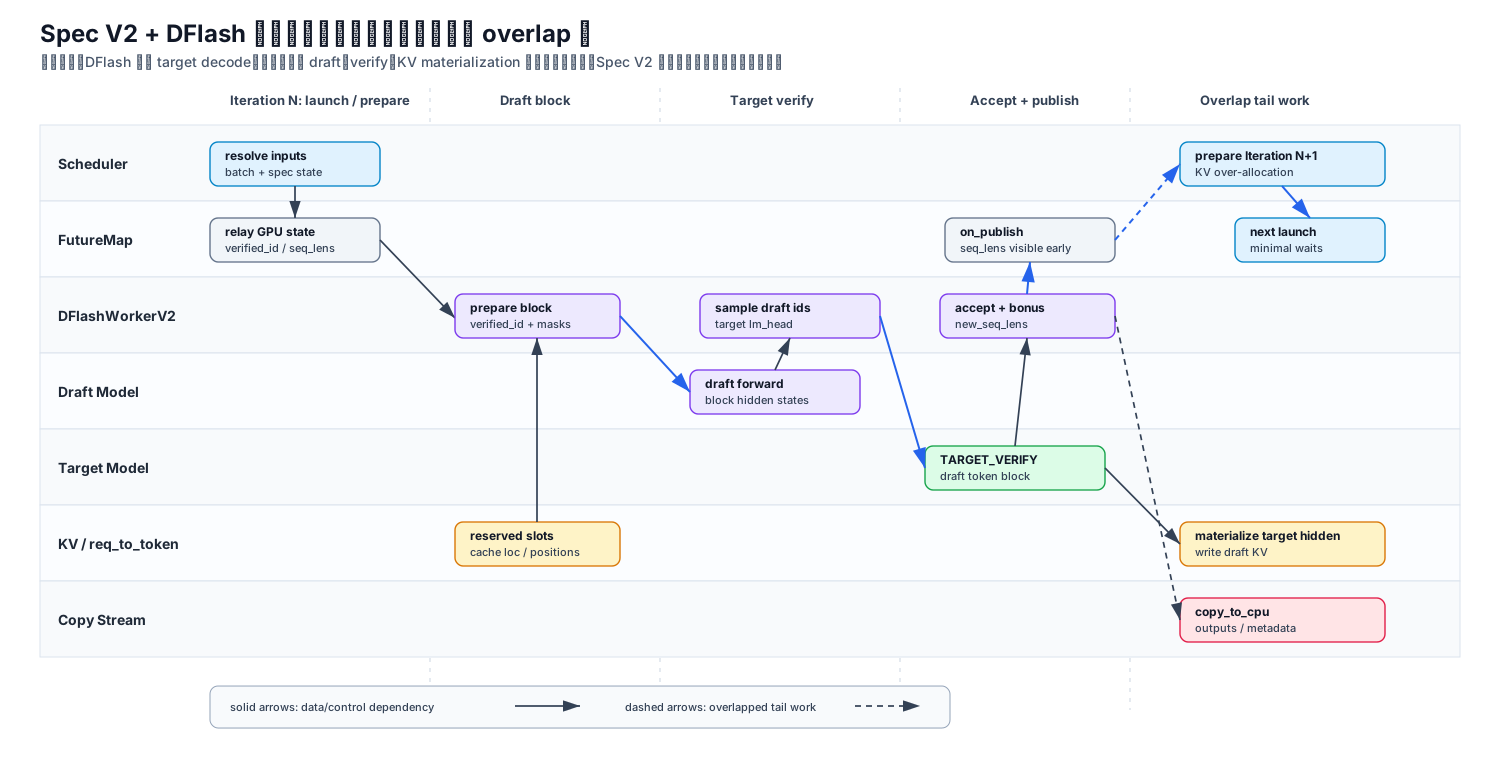
Spec V2 的核心不是让单个 GPU kernel 变快,而是让这些阶段不要完全串行。
结语
DFlash 的算法收益可以概括为:便宜地提出一批 token,并让 target 一次性验证。
SGLang Spec V2 的系统收益可以概括为:把 draft、verify、KV 写入、scheduler 准备、CPU copy 之间的等待压到最低。
两者合起来,才是 DFlash 在实际 serving 中能跑出高 throughput 的原因。前者决定理论上限,后者决定这个上限能不能在真实 serving 热路径里兑现。
参考资料
-
LMSYS Blog: The next generation of speculative decoding: DFlash and Spec V2 https://www.lmsys.org/blog/2026-06-15-next-generation-speculative-decoding-dflash-v2/
-
DFlash paper https://arxiv.org/abs/2602.06036
-
SGLang main branch source files https://github.com/sgl-project/sglang
-
Key SGLang implementation paths
python/sglang/srt/speculative/dflash_worker_v2.pypython/sglang/srt/speculative/dflash_info_v2.pypython/sglang/srt/speculative/dflash_info.pypython/sglang/srt/speculative/dflash_utils.pypython/sglang/srt/speculative/triton_ops/dflash_prepare_block.pypython/sglang/srt/speculative/triton_ops/dflash_accept_bonus.pypython/sglang/srt/speculative/triton_ops/fused_kv_materialize.pypython/sglang/srt/managers/scheduler.pypython/sglang/srt/managers/overlap_utils.py